Salamanca, in northwestern Spain, is part of the Castile and León region. With a history dating back to the Celtic era, it’s known for its ornate sandstone architecture and for the Universidad de Salamanca.
Founded in the 1100s and a key intellectual centre in the 15th-16th centuries, the university continues to add to the city’s vibrancy with its international student population. It is the oldest active University in Spain.
The Roman bridge has survived since the first century and allows passage over the Tormes River.
Day 1 and we underestimated just how cold it would be in the North of Spain. We took the bus into town and walked around the old city sights. The main square, the University area and of course the Cathedral.
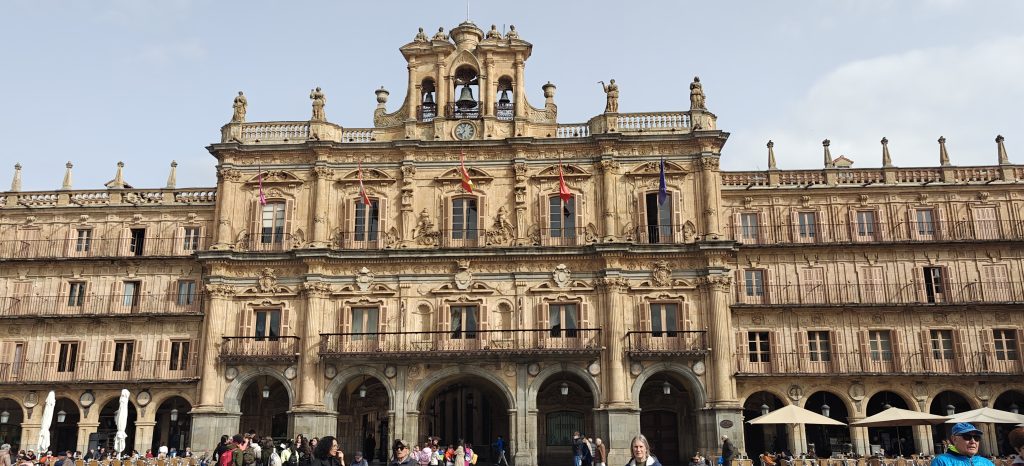
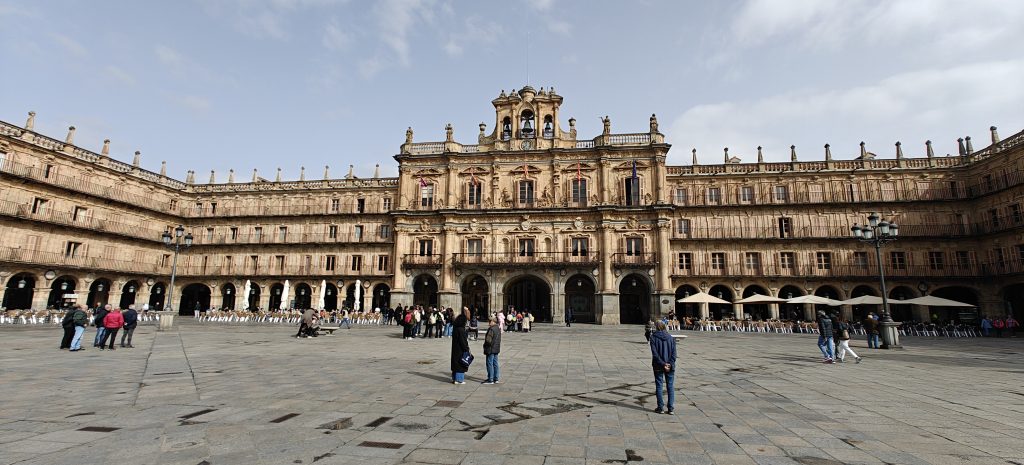
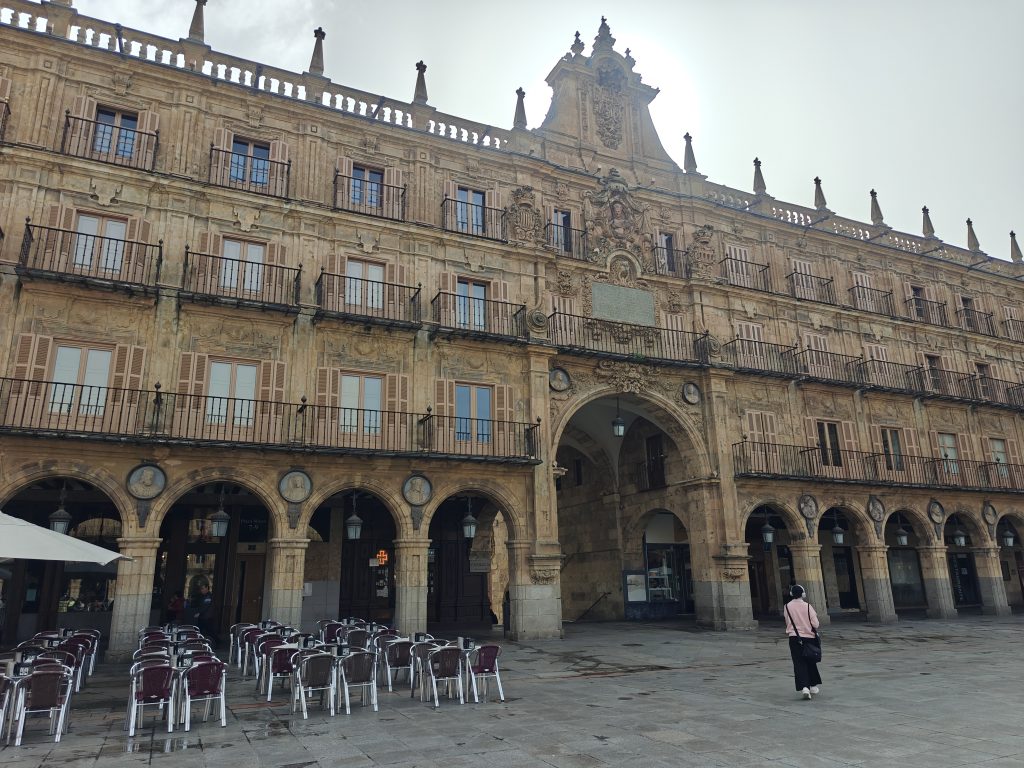
We arrived close to the Plaza Mayor and walked through it on our way to the Cathedral.
The Old and New Cathedrals are actually co-joined – a nice touch that they didn’t tear down the old institution when they built the new one.


The stonework on the Cathedral has some odd additions – we had been told about the “astronaut” but it was no-where to be found and after a short time looking, we decided to abandon the search and head for somewhere a little warmer!
In fact, we retreated into a nice Pizza Restaurant (“La Mafia”), mainly because it had no external seating and looked warm and inviting inside!
* * * * *
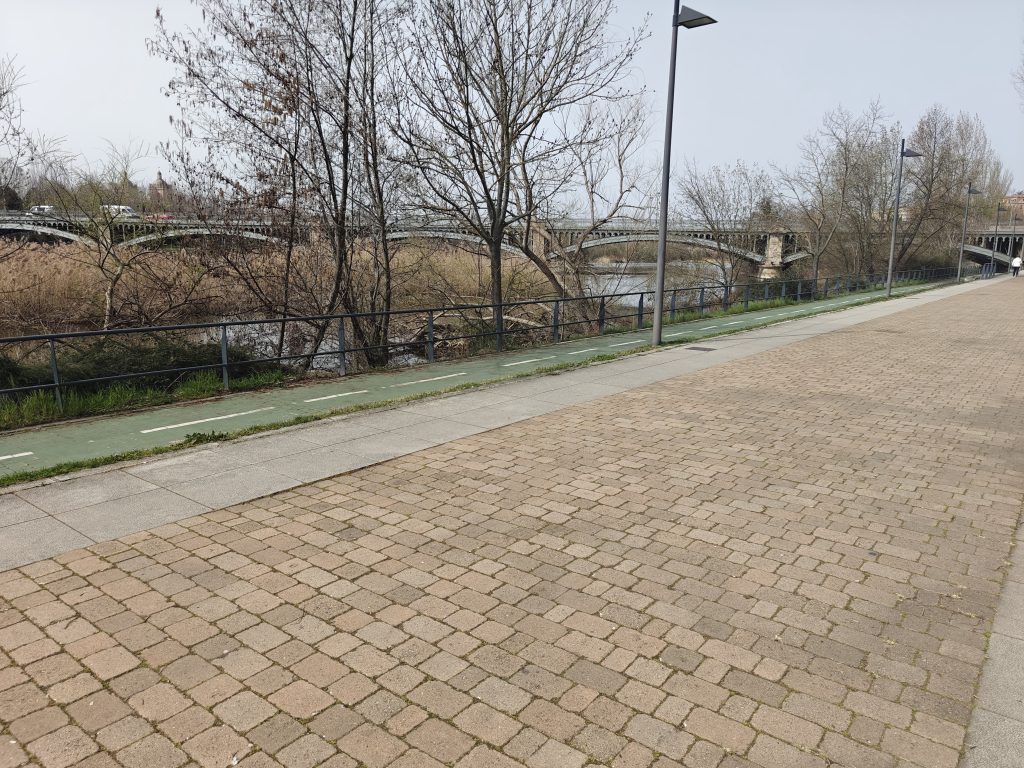
Day 2 and we would walk into Salamanca (around 7km) following the cycle track which runs from in front of the campsite all the way along the river and into the centre of Salamanca. Today we thought we had dressed far more appropriately for the weather but in the end, there was no bitterly cold wind and with clear blue skies, we spent much of the journey into town carrying our now surplus, multiple layers of clothing!
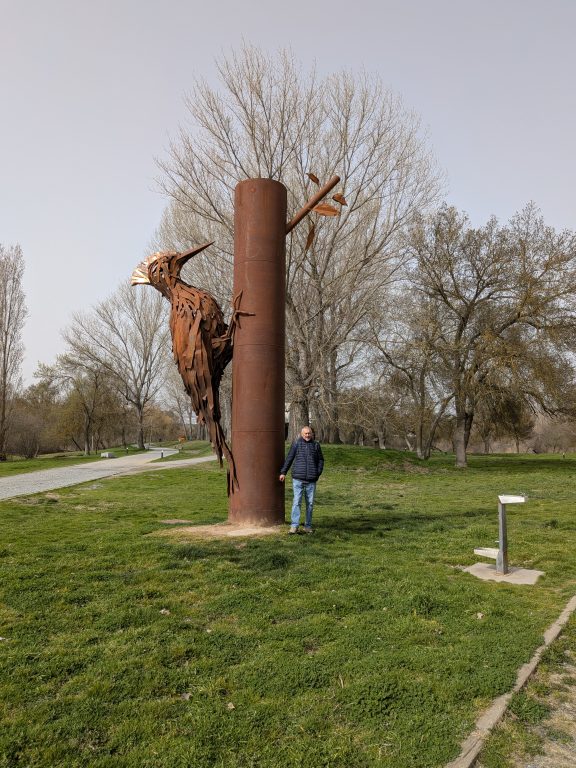
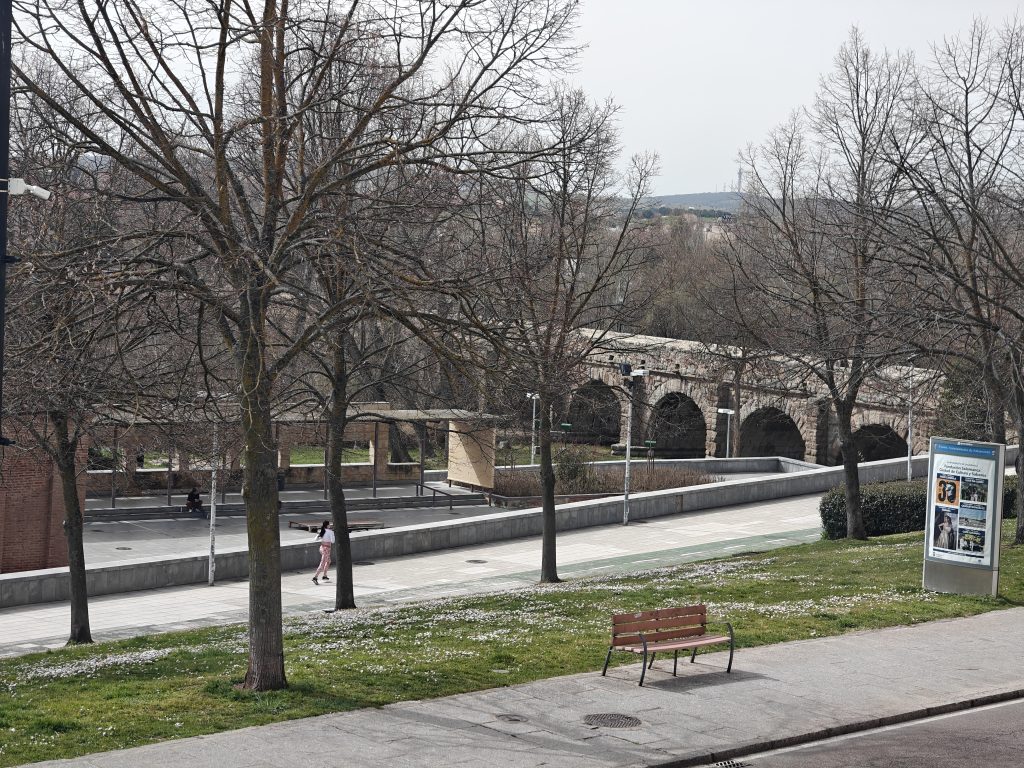
It’s an easy flat route and tracks through what seems like an endless park along the banks of the River Tormes.
Having passed under a new road bridge, we could see the original Roman bridge over River Tormes.
On arriving in the centre, we headed back to the cathedral to search for the astronaut. This time we found it, quite low down to the left of the main Cathedral entrance door.
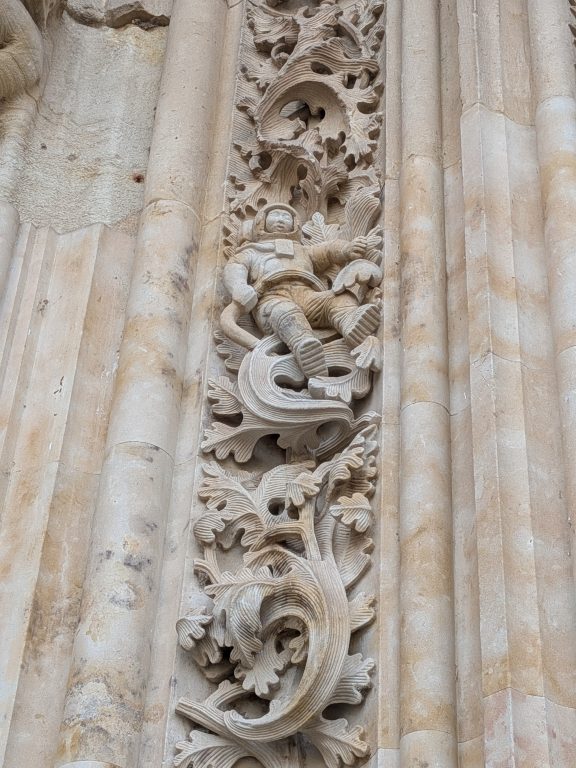
What is the story of the astronaut?
The astronaut carving on the Salamanca Cathedral in Spain is a modern addition from a 1992 restoration, not a 16th-century mystery. Sculptor Miguel Romero added the figure to the Puerta de Ramos as a signature of the era, symbolizing 20th-century technology and human exploration.
Key Facts about the Salamanca Astronaut:
Location: New Cathedral (Catedral Nueva), on the Puerta de Ramos facade.
Origin: Created during restoration work in 1992 for the “Las Edades del Hombre” exhibition.
Why an astronaut? It was intended as a modern symbol, following the tradition of artists adding contemporary elements during repairs.
Other Additions: The same artist added other, more whimsical, figures, including a gargoyle eating ice cream.
Controversy: Despite theories of ancient aliens or time travel, it is officially confirmed as a modern, whimsical, and artistic addition to the historic structure.
It was even warn enough for us to sit outside the local Tapas bar and have a small snack.
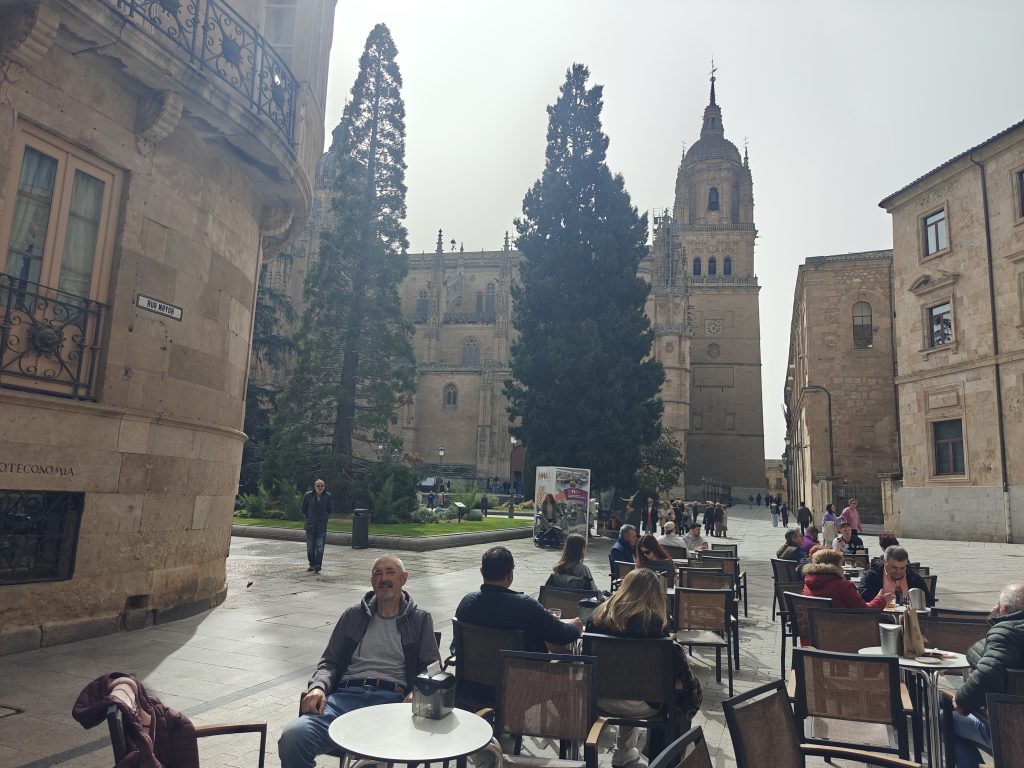
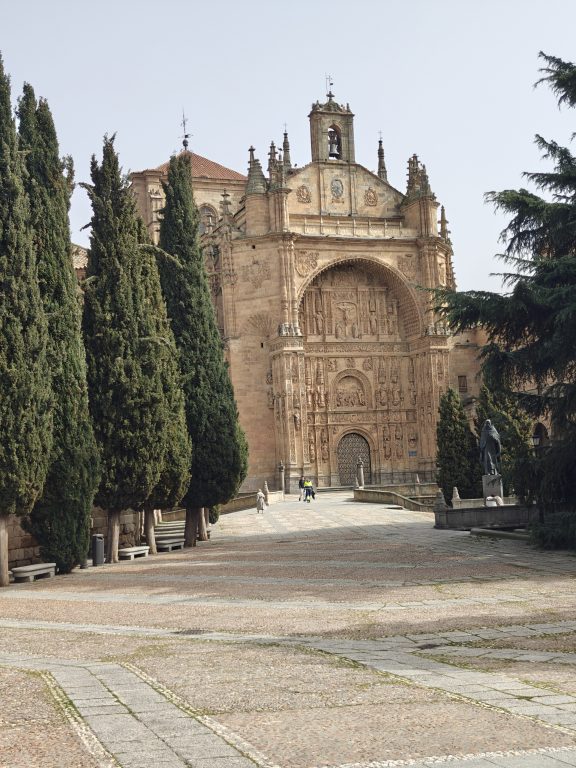
Whilst heading back to the bus stop, we passed the Convent of San Esteban. The Convent of San Esteban is a Dominican monastery and is situated in the Plaza del Concilio de Trento and was constructed in 1524, following the destruction of the previous primitive convent.
Whilst waiting for the bus back to the Campsite, we bumped into some folks on their way back to France from Camping La Rosaleda. Small world.
Tomorrow I think we will head further North ready for our ferry back to England.