Five of the Magnificent Seven from Ermysted’s “Class of 79” travelled from various locations in England. Notable absentees were Phil from Munich (no valid excuse recorded) and Spon from Skipton / Barnoldswick. Spon was in the middle of moving house from Skipton so it wasn’t to be on this occasion!
Brian, John, Mick, Steve and myself started out at the Harrogate Tap. Nice and convenient for the Bus and Train stations on what turned out to be a horrible wet day. The roaring log fire and great selection of beers kept us warm.
Refreshments continued later at the North Bar followed by food at the Cardoman Black, Indian restaurant.
Unbelievably, not a single piece of photographic evidence exists…
* * * * *
Heading South on Tuesday, my journey home was broken-up with an overnight “pub stopover” at the Carpenters Arms, Dale Abbey in Derbyshire. I met up with an ex-colleague and friend, Keith during the afternoon, and in the evening, Keith and his partner Carolyn joined me for dinner at the Carpenters.
* * * * *
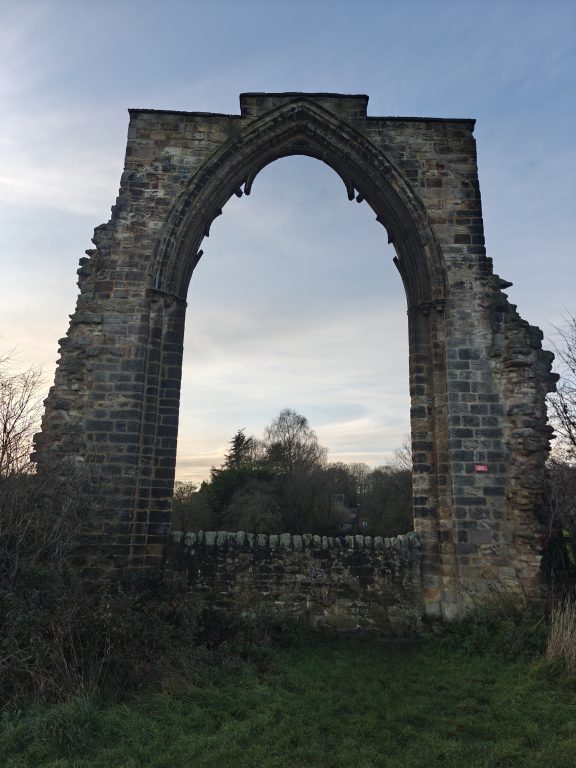
There isn’t much left of Dale Abbey. Just a single large arch. The crumbling stonework having long been removed by the locals to build their dwellings. In its prime, the Abbey provided priests at Ilkeston, Heanor, Kirk Hallam and Stanton by Dale and owned some 24,000 acres of land. Much of this would have been leased or rented out or used for grazing or for the production of produce for the residents at the Abbey.
The Augustinian monks first arrived at Dale Abbey in 1162 and from the year 1199 the Abbey became well established and survived for the next 340 years. The Act of Dissolution in 1539 brought to an end almost four centuries of monastic life in the Dale.
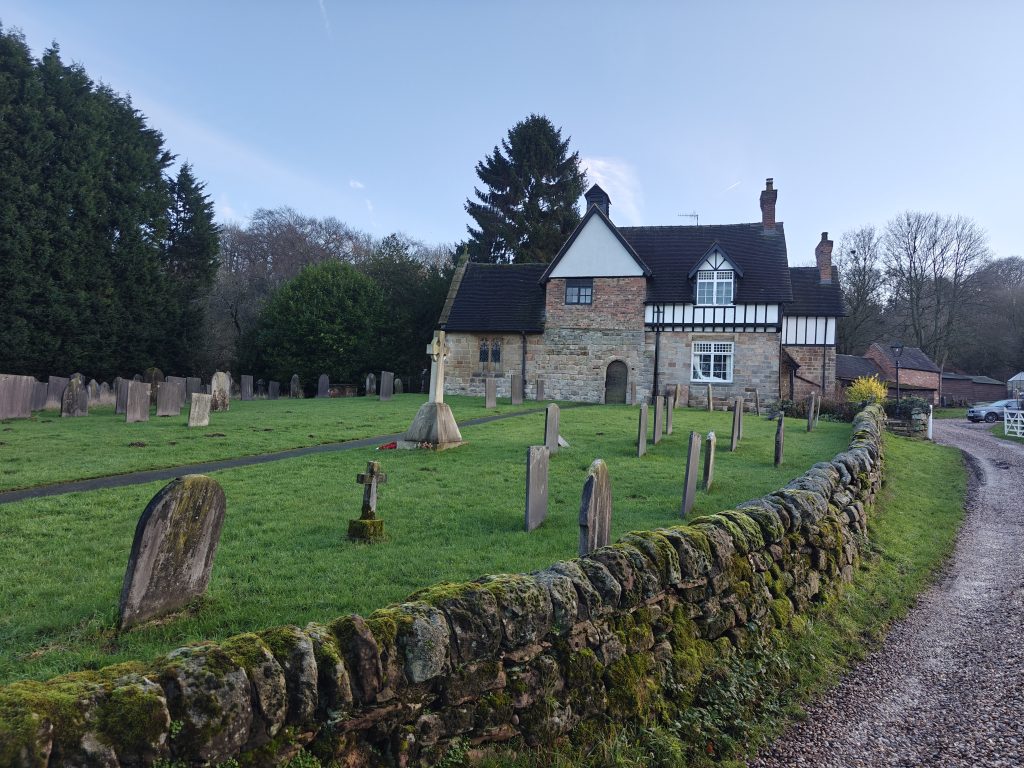
Dale Abbey also has a rather peculiar church.
Apart from its venerable age (twelfth century) and its fine state of preservation with extant wall paintings, there are two features which justify this. The first is its size. At only 26 by 25 feet, it is one of the smallest parish churches in the country. The second is that, like a great many dwellings dating from the 1920s and 30s, it is semi-detached.
The building with which it shares a wall is now a pleasant, private house. It may once, however, have served as the infirmary of Dale Abbey, allowing the sick and dying to come, or be brought, into the chapel and partake of spiritual comfort. Between then and now, however, it was the Blue Bell Inn. So small is All Saints’ that the parson would change into his vestments behind the bar, and a now blocked-up door from the gallery into the house enabled worshippers to nip through and procure some liquid refreshment during divine service. That door was said to lead from ‘salvation to damnation’.